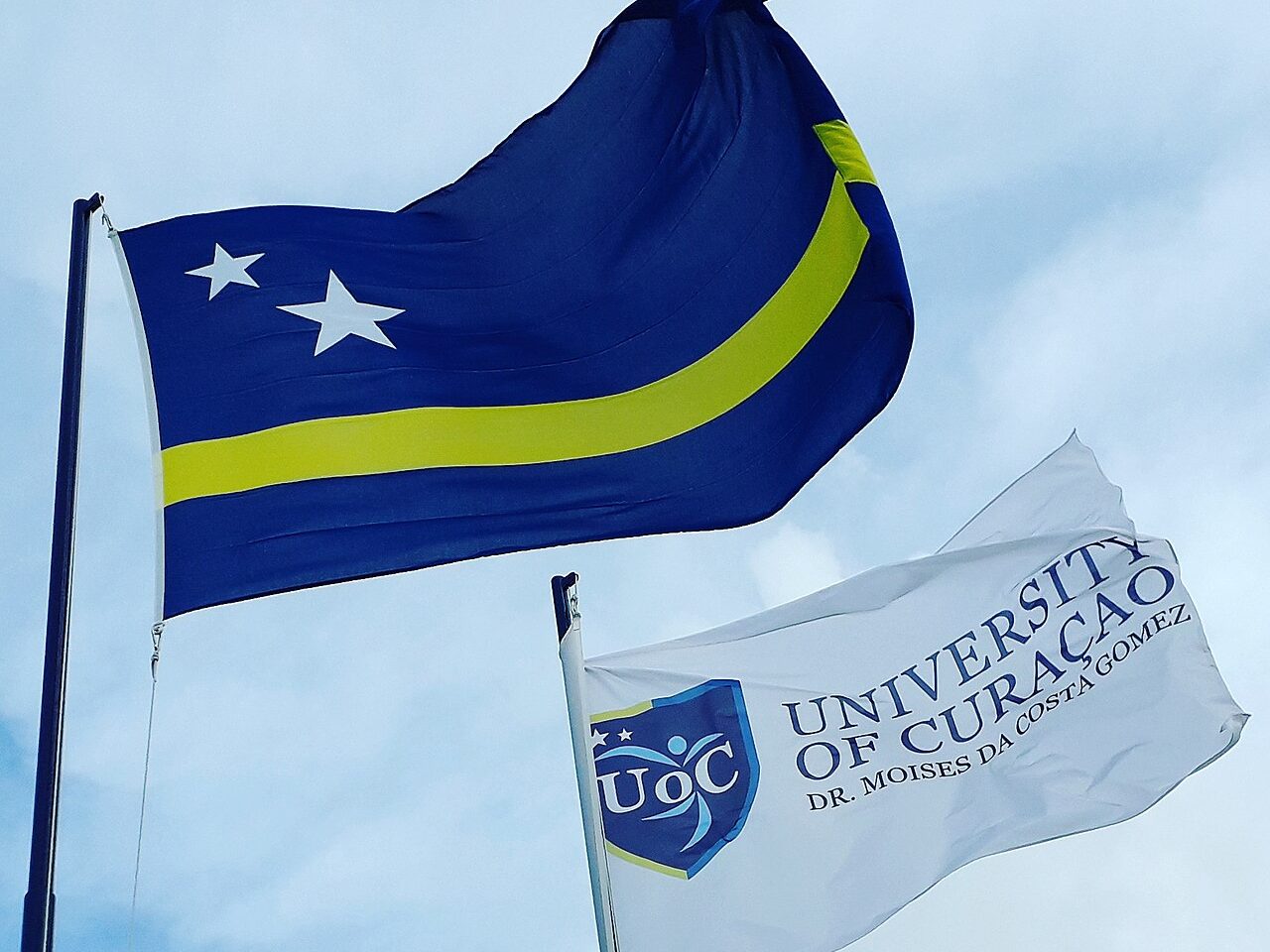
Study (study permit or Van Rechtswege)
Official source checked on October 26, 2026
Photo: DDJJ, CC BY-SA 4.0
Who does this apply to?
- Anyone coming to study at an educational institution in Curaçao.
- Residence permit for study: the track for almost all foreigners.
- Van Rechtswege track (declaration by operation of law): only Dutch and US citizens. Instead of documenting XCG 1,000 a month, you show sufficient, lasting means; the official page gives proof of your study funding as the evidence.
- You do not need it if you already live in Curaçao as the child of a foreign national, with a residence permit for family reunification: you can study on that permit.
Costs
- First application: XCG 625 ≈ US$ 349
- Renewal: XCG 615 ≈ US$ 344
- Other costs: Van Rechtswege track: XCG 615.
- Fee for one year. Since April 1, 2026 you can request the permit for 1, 2 or 3 years and pay for all of them up front: in a first application, the first year at that fee and each extra year at the renewal fee; when renewing, all of them at the renewal fee (for example, a first application for 3 years = XCG 1,855). See what changed on April 1, 2026 (Spanish) →
Dollar amounts are approximate, at the fixed rate of US$ 1 = XCG 1.79. You pay in XCG.
Work out your total for 1, 2 or 3 years, including stamps and the deposit for your nationality: open the cost calculator →
Decision time
4 months, on both tracks. Permit track: you wait for the decision on a first application outside Curaçao (the Toelatingsorganisatie confirmed it in writing on October 12, 2026), and you can wait for a renewal here.
Requirements
Gathering your papers? Tick them off in your checklist, remove what does not apply and print it: open my document checklist →
- Proof of payment of fees and charges (when paying, give your full name as the reference and, if there is room, your date of birth)
- Copy of your valid passport (if you have several nationalities, of every passport)
- Copy of your birth certificate, apostilled or legalized depending on the country (no older than 1 year; certificates from EU countries do not need it). If paternity was acknowledged, the acknowledgment certificate too
- Permit track only: certificate of good conduct from your last place of residence (no older than 3 months)
- Van Rechtswege track only: certificate of good conduct. The official page asks for one no older than 3 months; the law (Art. 3, letter f, LTU) and the 2016 policy ask for one covering the last 5 years, from every country where you lived, issued within the 2 months before you arrive in Curaçao: if you lived in more than one country, bring one from each or check with the Toelatingsorganisatie
- Permit track only: enrollment at an educational institution in Curaçao
- Permit track only: proof of means of at least XCG 1,000 a month, not counting tuition: a statement from the bank that money will be transferred to you every month, or a statement of your local account with at least XCG 12,000, or a scholarship, or the original guarantee statement from a local guarantor, with an XCG 10 stamp and proof of their solvency (if the guarantor is a private person or sole proprietor and is married, their spouse also signs it and attaches a copy of their ID)
- Permit track only: the original student declaration, completed and signed, with an XCG 10 stamp
- Van Rechtswege track only: proof of sufficient, lasting means (the page asks for proof of your study funding)
- To renew (permit track): copy of your current permit (decision and sticker), enrollment for the new school year, your study results, the proof of means again and a new original student declaration with an XCG 10 stamp; the birth certificate and the certificate of conduct are not repeated
Steps to apply
- Confirm enrollment at a recognized educational institution in Curaçao
How to get this done
Before applying, verify in writing with Curaçao's Department of Education (or directly with the institution) that your study program is officially recognized (e.g. as HBO) — this is a requirement that is actually enforced, confirmed by a real court case (see case law below).
- Gather the requirements for your track and scan them as PDF
How to get this done
How to scan your documents correctly
The scan (or photo) of each document must meet all these criteria, or the system may reject your application: (1) it must be a scan of an original document, not a copy of a copy; (2) scanned as straight as possible, not tilted; (3) no staples, paper clips or fingers visible in the image; (4) not edited or retouched; (5) avoid folds and creases; (6) all data must be sharp, legible and not blurry; (7) no crossed-out, covered or overwritten data; (8) for identity documents the image must show the whole document in colour (passport: top and bottom page; cédula: front and back); (9) leave about 2 cm of margin around the image; (10) the document must not have a translucent/transparent background.
- Use a real scanner if you have access to one (office, library, copy shop): it gives better results than a phone photo.
- If you use your phone, do it in good daylight, without direct flash, with the document on a flat, dark surface so the edges are clearly visible.
- Save each document as a PDF (not a loose JPG) when the procedure explicitly asks for PDF format.
- Pay the fee at Maduro & Curiel's Bank or Banco di Caribe: XCG 625 the first time on the permit track, XCG 615 on the Van Rechtswege track
How to get this done
Maduro & Curiel's Bank (MCB): to pay immigration fees (account 31967908, in the name of the Toelatingsorganisatie)
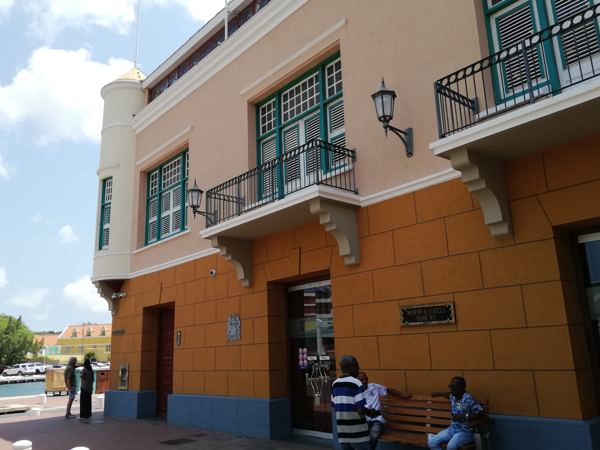
Plasa Jojo Correa 2-4, Punda, Willemstad, Curaçao (Punda Head Office) — Google Maps
Monday to Friday 08:00–14:00 (main branch; other branches may differ)
No appointment is needed for a deposit or a transfer. The Toelatingsorganisatie confirmed in writing on October 9, 2026 that you can pay by bank transfer, as the payment order says; the reference must include your full name; your date of birth can be added if there is room.
How to pay the fee for your procedure
Payment is made by deposit or transfer in the name of the Toelatingsorganisatie, at Maduro & Curiel's Bank (MCB), account 31967908, or at Banco di Caribe, account 36286001 (both accounts are on the payment order the Toelatingsorganisatie sent us on September 30, 2026). In the payment reference, put your full name, which is mandatory, and your date of birth if there is room (Toelatingsorganisatie, in writing, October 9, 2026). You must pay before submitting your application and show the original proof of payment if asked. Use the 'Payment order' form (on the procedure page) to find the exact amount for your case.
- Since April 1, 2026, if you apply for a permit for more than 1 year, you pay for all the years in advance: in a first application, the first year at the first-application fee and the others at the renewal fee; if you renew, all of them at the renewal fee (Toelatingsorganisatie payment order, September 30, 2026); see the policy notice on the home page.
- Keep the paper receipt AND a photo/scan: you need it for the application AND as a back-up if there is a dispute.
- Submit the application online
How to get this done
How to submit your application online
First, the Toelatingsorganisatie's portal, permit.immigrationcur.org: that is where you apply for the Van Rechtswege and Niet van Toepassing declarations (since September 1, 2016 they are only accepted online, not at the counter), the extension of a tourist stay and some residence permits, and people with US nationality have to use it too. Each person opens their own account, which also covers their spouse and children. If your procedure is not in the portal, scan the form and the other documents as PDF and send them by email to intake@immigrationcur.org (objections go to info@immigrationcur.org; check which applies on your procedure's page). Attach all the documents, scanned according to the official criteria, plus the proof of payment. If an authorised representative submits the application (not you), a signed authorisation and a copy of their ID must also be attached. You will receive an acknowledgement of receipt by email (the portal's comes from no-reply@immigrationcur.org; if you do not see it, check your spam folder): keep it as proof. Rib'e Lugá was separate, with its own application on that same portal, until registration closed on October 31, 2026.
- If you send it by email, write a clear subject line (e.g. 'Application VTTV - [your full name]') so it is processed faster.
- Attach files with descriptive names (e.g. 'passport.pdf', 'birth-certificate.pdf') instead of generic names like 'scan001.pdf'.
- Keep a copy of everything you send: you will need it if you later have to object to a negative decision.
- Wait for the decision (up to 4 months)
How to get this done
What to do while you wait for the decision
The standard term is 4 months from the moment you submit the complete application (the clock does not run while something is missing). If this is your first application for most procedures, you must wait for the decision outside Curaçao (except renewals/changes, which may be awaited in the country). The decision is sent by email to the address you gave on the form; check your spam folder too. You can check the status of your application at any time (see the 'Check the status of an application' page).
- If you move or change your email address while waiting, report it immediately to info@immigrationcur.org: if they cannot reach you, they may refuse your application for 'failure to cooperate'.
- Do not buy final return tickets until you have the decision in hand if your plan depends on approval.
- If positive: book an appointment to collect the document. If negative: you have 6 weeks to file an objection
How to get this done
Toelatingsorganisatie Curaçao (Admission Office)
Prinsenstraat 90, Punda, Willemstad, Curaçao — Google Maps
Monday to Thursday 08:00–15:00, Friday 08:00–12:00
Since Monday, November 24, 2025 the office has been back in its renovated building at Prinsenstraat 90, Punda: the information desk and the issuing of residence titles (passport stamps) are there. The temporary location at Saliña 127 (Eurobuilding), used since September 2024, is no longer the Toelatingsorganisatie's address. The phone number is 733-2000; the old numbers 733-2080, 733-2081 and 733-2083 are no longer in use. Appointments to collect a passport stamp, proof of return, refund or final departure are booked through www.immigrationcur.org. For questions, email info@immigrationcur.org or message 'Admission Office Curaçao' on Facebook/Instagram.
How to object to a negative decision
You have 6 weeks to file your objection (bezwaar) by email to info@immigrationcur.org. The period starts on the day after the date on which the Toelatingsorganisatie sent you the decision, not the day you receive or read it (LAR, Art. 56; official objection and appeal page): if the letter is slow to arrive or lands in your spam folder, the clock is already running. Your objection must include: your full name and address, a clear description of the decision you are challenging, why you disagree, what outcome you want, your signature, and an address in Curaçao if you live abroad. Attach a copy of the decision and any new evidence. If your objection is rejected (or you prefer to skip this step), you can appeal directly to the Court of First Instance of Curaçao; see the 'Objection and appeal' page for full details, including the legal strategy of asking for a 'provisional measure' (voorlopige voorziening) if you do not want to wait outside the country.
- Do not let the 6 weeks pass: after that deadline you lose the right to object this way.
- If your objection is against the refusal of a renewal, by default you still have to wait outside the country, as with a first application, unless you explicitly ask the court for a provisional measure.

Downloadable forms
- Payment order DOCX · 95 KB · in Spanish · Official English version DOCX · 84 KB
How to fill out this form
Betalingsopdracht / Orden de pago: the Toelatingsorganisatie publishes the same order in Spanish, English and Dutch, with the Maduro & Curiel's Bank and Banco di Caribe accounts, 1-, 2- and 3-year rows and its own investor row (XCG 1,865 / 3,095 / 6,170).
Form 910. This is the payment order you use to pay the procedure fees, at Maduro & Curiel's Bank (MCB) or Banco di Caribe, BEFORE you submit your application. You tick the line for your procedure and, for a permit by the year, the duration; each line's amount is already fixed.
Section single — Select your product/service: Mark (with an X or a circle) the line that matches your procedure EXACTLY. For a permit by the year, tick the purpose and, below it, the duration: 1, 2 or 3 years for a first application or a change of purpose; if you renew, the duration under “Renewal”. Each duration already carries the total for all the years, so do not add anything up; the table below gives the amount for 1 year. For example, a first application for work is XCG 655 for 1 year, 1,270 for 2 and 1,885 for 3, and renewing a work-based permit costs XCG 615 for 1 year, 1,230 for 2 and 1,845 for 3.
Proof of return XCG 225 Niet van Toepassing declaration XCG 225 Van Rechtswege declaration XCG 615 Internship stay XCG 525 Short stay XCG 535 Tourist stay extension XCG 525 Duplicate XCG 195 Final departure XCG 145 Investor, 3 years XCG 1,865 Investor, 5 years XCG 3,095 Investor, indefinite XCG 6,170 First application (work) XCG 655 First application (family reunification) XCG 655 First application (study) XCG 625 First application (rentier/ own business/ pensioner) XCG 635 Renewal (work/ study/ rentier/ pensioner/ own business) XCG 615 Renewal (family reunification) XCG 625 Change of purpose XCG 615 Tips
- ⚠️ Remember: since April 1, 2026, if your permit is for more than 1 year (up to 3 years), you pay for all the years in advance: in a first application, the first year at the first-application amount and each extra year at the renewal amount; if you renew, all of them at the renewal amount. The order's 2- and 3-year rows already carry that sum (Toelatingsorganisatie payment order, September 30, 2026).
- The order has no row for a change to study: the Toelatingsorganisatie confirmed in writing on October 12, 2026 that it costs XCG 615, like the other changes. Ask them how to mark it before paying.
- In the payment reference of the bank deposit, write your full name, which is mandatory. The order asks for “only the full name”, but the Toelatingsorganisatie clarified in writing on October 9, 2026 that your date of birth can also go in if there is room.
- Keep the paper or scanned receipt — you must show the original for inspection when you hand in your application.
- Application form DOCX · 2.6 MB · in Spanish · Official English version DOCX · 96 KB
How to fill out this form
Aanvraagformulier VTTV / Application Form VTTV: the same form in different languages, checked field by field.
This is the main form: it is used for the first application, renewal or change of almost every residence permit (work, family, study, rentier, own business; the investor has a separate form). It has 14 sections, numbered 1 to 13 and then 15 (there is no section 14). Only fill in the sections that apply to your case; leave the rest blank or write 'n/a'.
Section 1 — Reason for the application: Tick ONE box: first application, renewal or change (change only if you already had a valid permit).
Section 2 — Purpose of your stay: Tick the MAIN reason for your application (Employee, Director of a legal entity, Family reunification, Internship, Study, Own business, Pensionado arrangement, Rentier/Pensioner, or 'Other reason', where you write which). If you have more than one reason, choose the main one: the other requirements of your specific procedure depend on this box.
Section 3 — Payment details: Date you paid and the exact amount in XCG. You must have PAID before submitting this form; attach the proof.
Section 4 — Personal details of the foreign national (the applicant): Your full details: surname, first names, gender, date, place and country of birth, nationality(ies), FMSCRV number (only if you had a permit before), address abroad (first application only), address and postal address in Curaçao, phone, email (the decision is sent there), passport details, and marital status (married/divorced, with dates).
Section 5 — Partner's details: Only if you have a spouse or cohabiting partner: the same basic details as section 4. Not applicable? Write 'n/a'.
Section 6 — Children's details: Up to 6 children under 27: name, date of birth, country, nationality, and their current address if they don't live with you. Not applicable? Write 'n/a'.
Section 7 — Employment details / sources of income: Employer's name, your position, your income from work and your other income (for each, whether it is per week, fortnight, month or year) and your personal CRIB number. If it does not apply, tick n.a.
Section 8 — Guarantor's details: The 'guarantor' is whoever vouches for your stay: your employer (person or organisation) or the person you are joining. If it is a person: name, birth details, address, CRIB. If it is an organisation/company: company name, address, Chamber of Commerce (KVK) number, contact person, company CRIB.
Section 9 — Questions about your stay in Curaçao: Since when you have been in Curaçao and when you plan to settle. LITERAL WARNING ON THE FORM ITSELF: if you answer that you are already in Curaçao WITHOUT a valid residence title, the form itself warns that 'this may be a reason to refuse your application'. Think carefully about this answer and get advice if your situation is irregular.
Section 10 — Expiry date of your current permit: Only for a renewal or change: the exact date your current permit expires. The form itself reminds you that a renewal can be submitted at most 4 months before the expiry date and at the latest on the expiry date itself; submitting it later affects the residence rights you have built up.
Section 11 — Grounds for your application: Free space to explain your situation in your own words; add a blank page if you need more room. Here you can mention special circumstances (e.g. a child's medical condition, long-standing family ties) that case law shows the government must explicitly weigh.
Section 12 — Declaration on criminal record: Sworn statement that you have never been given a prison sentence or other custodial measure for an offence, community service or a work sentence, or an unconditional fine; that you have never accepted a settlement (transactie, an agreement with the Public Prosecutor) for an offence; and that you are not currently being prosecuted. If you CANNOT truthfully declare this, there is space to explain why. Do NOT lie here: concealing a record is a separate ground for refusal confirmed by case law (more serious than honestly stating the record).
Section 13 — Where you have lived in the last 5 years: First application only: list the countries where you have lived in the last 5 years.
Section 15 — Authorisation and signature: You authorise Immigration to request information about you from the Public Prosecutor, Interpol, the Tax Office, SVB, SOAW, banks and insurers. You sign and declare that everything is true: a false statement is a criminal offence and can affect your permit. Children aged 12 or over must sign THEMSELVES, not only a parent/guardian.
Tips
- Use CAPITAL LETTERS in every text field: the form asks for it explicitly.
- For a family reunification application, each family member needs a separate form: you do not fill in one form for everyone.
- Keep a copy of the signed form before you submit it: you will need it as a reference if you have to object to a negative decision.
- Guarantee declaration DOCX · 5.6 MB · in Spanish · Official English version DOCX · 7.5 MB
How to fill out this form
Garantieverklaring (Dutch)
Signed by the guarantor (employer, family member or any person/company vouching for the foreign national), who commits to the State to cover the costs of the foreign national's stay in Curaçao. At the top there is a box marked “Sello/Zegel XCG 10” for the XCG 10 adhesive stamp.
Section 1 — Guarantor's details: Surname, first names, sex, address (if the guarantor is a company, its business address), ID number, date and place of birth, nationality and phone. If the guarantor is the employer (a company), give the company name; the personal details and signature must be those of the director or an authorised representative.
Section 2 — Guarantee obligation: Fixed text (do not fill in): the guarantor declares they will cover the costs to the State and other public bodies arising from the foreign national's LEGAL OR ILLEGAL stay, including the cost of any removal/departure journey to a country that will admit them. The guarantee only ends when the foreign national leaves Curaçao for good or obtains a change of permit.
Section 3 — Foreign national's details: Surname, first names, sex, date and place of birth, country of birth, address, marital status, nationality, phone: the details of the person being guaranteed.
Section 4 — Guarantor's signature: Date and place (Willemstad). Signature of the guarantor and, in a separate box, signature of the guarantor's spouse.
Tips
- If the guarantor is a private individual or the owner of a sole proprietorship and is married, their spouse also signs the declaration and attaches a copy of a valid ID (the annex to the application form requires it); without that signature the guarantee is incomplete.
- The commitment covers 'legal or illegal' stay: the guarantor is financially responsible even if the foreign national ends up without legal status, including the cost of the journey out of Curaçao, also in case of removal.
- At the top, the form has a box marked “Sello XCG 10”: that is where the XCG 10 adhesive stamp required by the procedure page goes. Buy it before signing; without it the declaration is incomplete.
- Student declaration DOCX · 636 KB · in Spanish · Official English version DOCX · 636 KB
How to fill out this form
Studentenverklaring (Dutch)
Signed by the foreign student, acknowledging the conditions and limits of a study permit, above all that they may NOT work. At the top there is a box marked “Sello/Zegel XCG 10” for the XCG 10 adhesive stamp.
Section 1 — Applicant's details: Surname, first names, sex, address, marital status, date and place of birth, nationality, phone, and the details of the educational institution (name, the course/programme, address and phone of the institution).
Section 2 — Declaration of conditions (student's signature): Fixed text the student acknowledges by signing: (1) the stay is only allowed for the purpose of STUDY; (2) they may not work on the local labour market; (3) the stay is temporary and does NOT build up a right of residence; (4) if caught working, the permit will be withdrawn; (5) they must leave Curaçao if that happens.
Section 3 — Signature: Date and place (Willemstad, Curaçao), signed by the student personally.
Tips
- In practice this document is a signed legal warning: working while you hold a student permit is a direct and explicit ground for revocation. The exception is an internship your programme requires (official FAQ).
- At the top there is a box marked “Sello XCG 10”: that is where the XCG 10 adhesive stamp required by the page goes, for both the first application and the renewal.
- The declaration itself says so: a study permit does not build up residence rights, so it does not count towards a future indefinite permit. If you want to stay for good, this permit alone will not get you there.
Recommended strategy, based on won cases
See the strategy and the steps
Legal review: pending This page summarises court rulings and has not yet been reviewed by a lawyer. It is not legal advice. What this means
What the courts say
The only known precedent is a clear loss: an applicant who had been undocumented for years did not get a study permit because she did not prove with objective data that she had been admitted full-time to a recognized institution (private ones, as HBO by the Department of Education). The court does enforce this requirement — it is not a mere formality.
What to do, in order
- Before enrolling and applying, confirm in writing with Curaçao's Department of Education that your institution has official recognition (if it is private, as HBO) — the policy requires it and the court upheld it.
- Submit with your application the institution's letter of admission to a full-time programme and the proof of its recognition: failing to prove admission with objective documents was the reason for the refusal in the case cited.
Main risk
Not being able to prove with objective documents that you were admitted full-time to an institution recognized by the Department of Education — a rejection cause already confirmed by the courts.
Important notes
- Which track is yours. With a Dutch or US passport, the Van Rechtswege track, which asks for fewer documents: instead of XCG 1,000 a month, you show sufficient means with proof of your study funding. Everyone else applies for the residence permit for study, which requires enrollment at an institution in Curaçao and means of at least XCG 1,000 a month. Official requirements of the Van Rechtswege track for students: Toelatingsorganisatie page.
- Warning based on real case law: before applying, make sure your institution is recognized (if it is private, as HBO by the Department of Education) and that you can prove with objective documents that you have been admitted to a full-time programme: without that proof, the court upheld the refusal. See case cited below.
- The Student Declaration you sign says you may not work on the local labour market and that, if you are found at a workplace, your permit will be revoked and you will have to leave Curaçao. The official FAQ adds that the permit is also revoked if you stop studying, and that the internship your programme requires is allowed. Time as a student does not build up a right of residence: it does not count toward indefinite residence.
- The first application is awaited outside Curaçao. The old FAQ and the 2006 policy (HIG, section 6.6) let students wait up to 3 months in Curaçao as tourists. Not any more: on October 12, 2026 the Toelatingsorganisatie confirmed in writing that the decision on a first application is awaited abroad, as its page says. A renewal can be awaited here.
- How long it lasts. Since April 1, 2026 you can apply for the permit for 1, 2 or 3 years, paying the fee for each year, and you apply to renew from 4 months before it expires (official page in Dutch). In total, the policy lets you stay at most the official length of your programme plus 1 year to finish it; on the Van Rechtswege track, the declaration covers the length of the study plus one year (HIG 2006, section 6.3). If you change institutions, you have to apply for a change of the permit.
Related real case law (1)
See the 1 cases
Real cases from the courts of Aruba, Curaçao, Sint Maarten and the Caribbean Netherlands, which share the Joint Court of Justice. We show the island of each one, because each island's rules can differ. Each number links to the original text.
Legal review: pending This page summarises court rulings and has not yet been reviewed by a lawyer. It is not legal advice. What this means
-
A Jamaican woman who had been undocumented since 2010 applied for a study permit and did not prove with objective data that she had been admitted to a full-time programme at a university, hogeschool or private institution recognized as HBO by the Department of Education: she lost. The court found that requirement of the policy reasonable (HIG 2006, section 6.2), so it is actually enforced.
Frequently asked questions
How much does a study permit in Curaçao cost?
The official cost is XCG 625. See the full page for the exact breakdown of renewal, change and other costs.
What are the requirements for a study permit in Curaçao?
Among the main ones: Proof of payment of fees and charges (when paying, give your full name as the reference and, if there is room, your date of birth); Copy of your valid passport (if you have several nationalities, of every passport); Copy of your birth certificate, apostilled or legalized depending on the country (no older than 1 year; certificates from EU countries do not need it). If paternity was acknowledged, the acknowledgment certificate too. See the full list on the procedure page.
How long does the decision on a study permit in Curaçao take?
4 months, on both tracks. Permit track: you wait for the decision on a first application outside Curaçao (the Toelatingsorganisatie confirmed it in writing on October 12, 2026), and you can wait for a renewal here.
What are the odds of winning a court case about a study permit in Curaçao?
1 real Rechtspraak ruling related to this procedure was analyzed — see the case-by-case detail on the page.
Related procedures
Official source: https://immigrationcur.org/en/dep/stage-studie-2/